
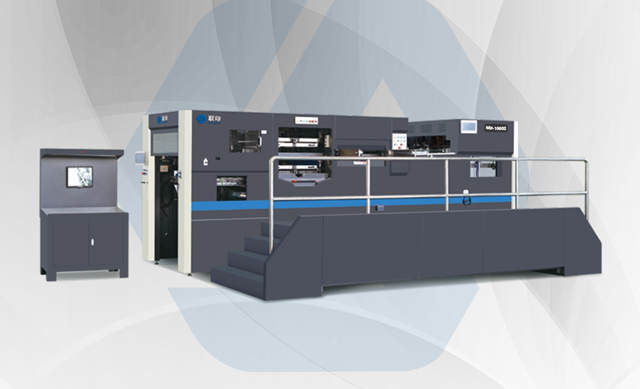
This in‑depth guide is designed for international buyers, manufacturers, suppliers and exporters
who are searching for reliable automated die cutting and deep embossing machines. The content
covers industry‑standard definitions, technical specifications, configuration options, common
applications, and key purchase criteria – without naming specific brands or companies – so it can
be used directly as an SEO‑friendly blog post, category page or industry landing page.
An automated die cutting and deep embossing machine is a type of post‑press or
finishing equipment used to cut, crease, emboss and sometimes hot‑foil stamp paper, board,
plastic sheets, leather, textiles and multilayer packaging materials. The machine uses steel dies
or embossing plates mounted on a platen or cylinder, combined with programmable automation, to
process large volumes of sheets or web rolls with high precision and repeatability.
In many printing and packaging plants, the same machine frame supports several functions:
die cutting, creasing, deep embossing,
foil stamping and kiss cutting. Automated feeding,
registration and stacking systems reduce manual labor, increase speed and improve production
consistency. Modern machines integrate servo drives, human‑machine interfaces (HMIs) and remote
diagnostics, making them a central part of smart and digitalized packaging lines.
To select the right automated die cutting and deep embossing machine, it is useful to understand
the most common technical terms used by manufacturers, suppliers and exporters.
Die cutting is the process of cutting substrates using a shaped steel rule or
solid die. In packaging, it is typically used to cut carton blanks, labels, stickers, greeting
cards, game boards and specialty forms. The cutting action can be:
Embossing is a finishing technique where the material is pressed between a male
and female die to create a raised or recessed image. It is widely used for logos, decorative
patterns and tactile effects on premium packaging, books and stationery.
Deep embossing refers to a more pronounced, three‑dimensional relief compared
with standard embossing. Deep embossing machines require:
Many automated die cutting and deep embossing machines also support foil stamping.
In hot foil stamping, a heated die transfers metallic or pigmented foil onto the surface. It can
be combined with embossing to create foil embossing effects. Cold foil systems
use UV‑curable adhesives and offset or flexo units but may still be integrated with die cutting
and embossing stations in complex finishing lines.
Automation in die cutting and embossing usually means:
Register accuracy is the precision with which the sheet or web is positioned
relative to the die. High register accuracy is critical for multicolor printed sheets, tight
tolerances and complex packaging structures.
Compared with manual or semi‑automatic equipment, modern automated die cutting and deep embossing
machines offer several important benefits for packaging converters, printers and brand owners.
synthetics, leather and specialty laminates.
Manufacturers, suppliers and exporters typically categorize automated die cutting and deep
embossing machines according to their mechanical design, feeding method and level of automation.
Flatbed or platen die cutters use a flat chase and a moving platen to press
sheets against the die. This configuration is widely used for carton packaging, greeting cards
and premium printed products.
Rotary die cutting machines use cylindrical dies mounted on rotating cylinders.
These machines are often used for:
printing and folding carton plants.
label, flexible packaging and industrial converting lines.
cutting and embossing actions. They are suitable for small‑scale or specialty operations.
embossing, stripping and delivery for high‑volume industrial production.
Many finishing lines combine several processes into a single machine or modular platform,
for example:
Automated die cutting and deep embossing machines are used across a wide range of industries.
Below is a non‑exhaustive list of common applications.
When manufacturers, suppliers and exporters present automated die cutting and deep embossing
machines, they usually highlight a set of standard technical specifications. Buyers can use
these parameters to compare different models in a neutral, brand‑independent way.
| Specification Category | Typical Range / Option | Notes for Buyers |
|---|---|---|
| Max. Sheet Size (W × L) | 500 × 700 mm to 1,600 × 2,050 mm | Choose according to print format and largest job size. |
| Min. Sheet Size (W × L) | 250 × 300 mm (varies) | Important for small formats and label sheets. |
| Max. Mechanical Speed | 2,500 – 9,000 sheets/hour for flatbed; 50 – 300 m/min for rotary | Real production speed depends on material, die layout and stripping. |
| Cutting Pressure | Up to 300 – 600 tons (flatbed); lower for rotary | Higher pressure is needed for deep embossing and heavy board. |
| Material Thickness | Paper 80 – 600 gsm; board up to 4 – 5 mm; corrugated up to B or C flute | Verify actual limits for each machine model. |
| Registration Accuracy | ±0.05 – ±0.15 mm (typical) | Critical for tight‑tolerance packaging and multicolor designs. |
| Embossing Depth | Standard: 0.1 – 0.4 mm; Deep: up to 1.2 mm or more, depending on material | Embossing depth is also influenced by die design and substrate. |
| Foil Stamping Temperature Range | 80 – 200 °C (176 – 392 °F) | Accurate control is needed for metallic foils and specialty films. |
| Number of Zones for Heating | 3 – 12 zones (or more) | More zones allow finer temperature profiling across the platen. |
| Automation Level | Manual, semi‑automatic, fully automatic | Impacts labor demand, throughput and investment cost. |
| Stripping / Blanking | Manual, semi‑automatic, automatic | Automatic blanking significantly increases net output. |
| Power Supply | 380 – 480 V, 3‑phase, 50/60 Hz | Check compatibility with local power grid. |
| Installed Power | 15 – 80 kW+ (depending on size and options) | Affects energy consumption and factory infrastructure needs. |
| Machine Weight | 5 – 40 tons or more | Important for foundation design and transport planning. |
| Control System | PLC + HMI, servo drives, remote diagnostics | Influences reliability, accuracy and integration with other systems. |
| Compliance and Certification | CE, UL, CSA, ISO, local safety standards | Essential for legal compliance and export to specific regions. |
Apart from the overview above, buyers often evaluate additional details such as:
Leading manufacturers, suppliers and exporters of automated die cutting and deep embossing
machines typically offer a similar portfolio of core features and optional modules. These features
help buyers to tailor the machine to specific market segments and production requirements.
Selecting the optimal machine involves balancing technical requirements, budget, available space
and long‑term business strategy. The following step‑by‑step method can help buyers make a
structured decision when comparing offerings from different manufacturers, suppliers and
exporters.
Higher automation usually means higher investment but lower labor cost and higher throughput.
Buyers should evaluate:
The purchase price is only one part of the investment. Consider:
The table below summarizes typical decision factors when comparing offers from different machine
builders, distributors and exporters. It can be used as an internal checklist for procurement
teams.
| Criteria | Questions to Ask | Impact on Operation |
|---|---|---|
| Format Size | Does the machine handle current and future sheet formats? | Limits or enables certain product types and press combinations. |
| Material Capability | What thickness and types of materials are supported? | Determines flexibility across packaging and commercial jobs. |
| Cutting Pressure | Is the pressure sufficient for deep embossing and heavy board? | Affects quality on challenging substrates and complex designs. |
| Speed and Productivity | What is the practical output speed for typical jobs? | Direct influence on delivery times and cost per unit. |
| Automation Level | Are feeding, stripping and blanking fully automated? | Reduces labor needs, increases throughput and consistency. |
| Make‑Ready Time | How long does it take to change dies and set up a new job? | Crucial for short‑run and frequent changeover environments. |
| Foil and Embossing Options | Are hot foil, hologram or braille modules supported? | Enables premium value‑added finishing for high‑margin products. |
| Control System | Is there a modern HMI, job memory and remote service access? | Improves ease of use and reduces downtime. |
| Service and Training | Are training, manuals and local technical support available? | Impacts machine uptime and long‑term stability. |
| Energy and Operating Costs | What is the power consumption and maintenance schedule? | Contributes to total cost of ownership over machine lifetime. |
| Compliance and Safety | Does the machine meet relevant international standards? | Essential for legal operation and worker protection. |
The following example tables illustrate how technical data for automated die cutting and deep
embossing machines can be structured. Values are indicative ranges only and should be confirmed
with actual equipment suppliers.
| Item | Typical Value |
|---|---|
| Max. Sheet Size | 1,060 × 760 mm |
| Min. Sheet Size | 400 × 350 mm |
| Max. Speed | 7,500 sheets/hour |
| Cutting Pressure | Up to 300 tons |
| Material Range | Paper 90 – 2,000 gsm, corrugated up to 4 mm |
| Register Accuracy | ±0.1 mm |
| Embossing Mode | Standard and deep embossing with heated platen |
| Foil Stamping | Optional hot foil module with 6 heating zones |
| Stripping / Blanking | Automatic stripping, optional blanking station |
| Power Requirement | 380 V, 50 Hz, 45 kW installed |
| Machine Dimensions (L×W×H) | 8,000 × 4,000 × 2,500 mm (approx.) |
| Machine Weight | Approx. 20 tons |
| Item | Typical Value |
|---|---|
| Max. Sheet Size | 1,600 × 2,050 mm |
| Min. Sheet Size | 650 × 800 mm |
| Max. Speed | 4,500 sheets/hour |
| Cutting Pressure | Up to 500 – 600 tons |
| Material Range | Corrugated up to double wall, heavy solid board |
| Register Accuracy | ±0.25 mm |
| Embossing Capability | Suitable for logos and functional embossing on large surfaces |
| Automation | Fully automatic feeding, non‑stop delivery, automatic waste removal |
| Power Requirement | 400 V, 50/60 Hz, 60 – 80 kW installed |
| Machine Dimensions (L×W×H) | 12,000 × 5,000 × 3,000 mm (approx.) |
| Machine Weight | 30 – 40 tons (approx.) |
| Item | Typical Value |
|---|---|
| Web Width | 330 – 520 mm |
| Max. Speed | 150 – 250 m/min |
| Material Range | Films, paper, light carton, label stock |
| Die Type | Rotary solid or flexible dies |
| Embossing | Rotary embossing for labels and decorative patterns |
| Register Control | Servo driven with print mark sensors |
| Unwind / Rewind Diameter | 600 – 1,000 mm |
| Power Requirement | 380 V, 50/60 Hz, 15 – 25 kW installed |
High‑quality automated die cutting and deep embossing depends not only on the machine itself
but also on proper process control and inspection.
Companies that manufacture, supply or export automated die cutting and deep embossing machines
should consider several additional factors when serving global markets.
A standard embossing machine typically creates subtle raised or recessed images, while a deep
embossing machine is designed for much stronger, three‑dimensional relief with higher pressure
stability, more robust frames and more precise temperature and dwell time control.
Many modern automated die cutting machines can be configured as combination units. They may
include separate or integrated stations for die cutting, deep embossing and hot foil stamping.
The feasibility depends on the mechanical design and available options from the specific machine
manufacturer.
Die quality is critical. Even the most advanced die cutting and deep embossing machine cannot
compensate for poorly manufactured or worn tooling. Precision‑made dies, correct rules,
carefully prepared embossing plates and proper makeready are essential for stable production.
Automated machines reduce manual intervention, but skilled operators are still necessary for job
set‑up, die handling, quality control and troubleshooting. Training provided by the machine
supplier and clear operating procedures help to shorten the learning curve.
Installation time depends on machine size and site preparation. For medium‑format sheet‑fed
machines, typical installation and commissioning can range from several days to a few weeks.
Large‑format lines or integrated systems may require longer schedules.
Automated die cutting and deep embossing machines are strategic investments for printing and
packaging businesses that want to improve productivity, quality and value‑added finishing.
Understanding the core machine types, key technical specifications and selection criteria enables
manufacturers, suppliers and exporters – as well as converters and end users – to make informed
decisions and build efficient, future‑ready production lines.
By using the specification tables, comparison criteria and process explanations in this guide,
buyers can evaluate different equipment offers in a structured way, ensuring that their chosen
automated die cutting and deep embossing machine meets present and future market demands.
```
NÚMERO DE CONTATO +86 18713883276(MESMO QUE WHATSAPP) E-mail: tslianshun@126.com
endereço: vila CAI he dong, cidade CAI ting Qi AO, condado de Y UT Ian, cidade de Tangshan, província de Hebei
Copyright © 2025 Tangshan Lianshun Printing Machinery Manufacturing Co., Ltd. Todos os direitos reservados


Este site usa cookies para garantir que você tenha a melhor experiência em nosso site.

 English
 Español
 Pусский
 العربية
 中文



 Telefone
Comente
(0)