
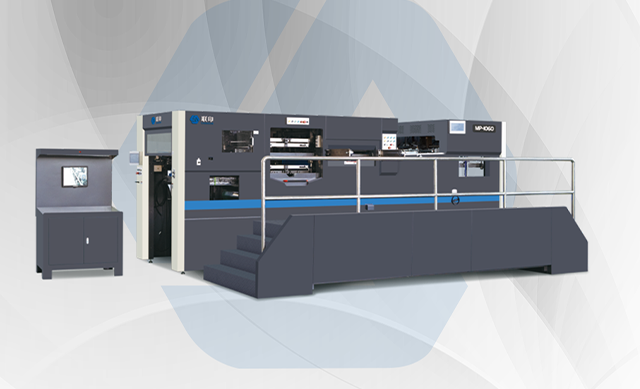
This industry-focused guide explains everything buyers, distributors, and engineers need to know about
high rigidity structure die cutting machines. It is designed for use on
blog pages, directory pages, and industrial category pages and focuses on
vendor-neutral, technical, and sourcing-related information without naming specific companies.
A high rigidity structure die cutting machine is a type of industrial die cutter
designed with a robust, reinforced frame and mechanical structure to ensure:
These machines are widely used in converting, packaging, electronics, printing, and automotive
supply chains where precise cutting, creasing, or forming of sheet or roll materials is required.
The “high rigidity structure” refers to the frame, crossbeam, guide pillars,
and platen assemblies being engineered to resist bending and vibration even under
high tonnage die cutting forces.
In industrial terminology, a high rigidity structure die cutting machine typically means:
A flatbed or platen-style die cutting press with a heavy-duty body,
often cast iron or welded steel, optimized through ribbing and finite element analysis (FEA).
An equipment platform capable of precise registration and uniform pressure
distribution across the cutting area.
A system designed for high-volume industrial production, often integrated with
automatic feeding, stripping, or stacking modules.
In the overall die cutting machinery market, high rigidity structure die cutting machines sit in the
mid-to-high-end segment. They are commonly contrasted with:
Light-duty swing arm or clicker presses – low-cost, low-tonnage, less rigid.
Rotary die cutting systems – optimized for continuous web speed but not always
delivering the same cutting force on thicker or harder materials.
Manual or semi-manual die cutters – limited in size, speed, and repeatability.
High rigidity structure die cutting machines are preferred when customers need tight
tolerances, consistent force distribution, long tool life, and robust 24/7 operation.
Top-rated high rigidity structure die cutting machines share a number of common design characteristics
that differentiate them from general-purpose cutting equipment.
Reinforced machine frame with thick plates, ribs, and gussets to increase overall stiffness.
High-strength materials such as cast iron, structural steel, and alloy steel components.
Precision ground platens to ensure flatness and parallelism over large cutting areas.
Heavy-duty guide columns and bushings or linear guides for accurate up/down motion.
Optimized load distribution to minimize deflection at the center of the cutting bed.
Rigid-frame die cutting machines deliver a range of operational and economic advantages, making them
popular among factories, converters, OEM suppliers, and contract manufacturers.
High rigidity structure design directly improves:
Dimensional accuracy – reduced deflection improves part size consistency.
Registration accuracy – stable structure helps maintain tight alignment with printed
graphics or pre-formed features.
Edge quality – consistent pressure yields cleaner cuts and reduces burrs or ragged edges.
High rigidity allows faster cycle rates and stronger cutting forces without compromising precision.
This enables:
A rigid structure distributes load evenly across the die:
Due to the stable mechanical platform, the same machine can be configured for:
While the initial capital cost of a high rigidity structure die cutting machine can be higher than
light-duty models, factories often achieve:
High rigidity structure die cutting machines serve a wide range of industries. Because of their
combination of strength, accuracy, and stability, they are often specified for high-value or
technically demanding projects.
| Industry | Typical Products | Why High Rigidity Is Preferred |
|---|---|---|
| Packaging & Printing | Cartons, boxes, labels, blister cards | Precise creasing & cutting for print registration and consistent folding |
| Electronics | Insulating pads, thermal pads, EMI shielding gaskets | Fine features, tight tolerances, and multi-layer laminates |
| Automotive | Gaskets, sound insulation parts, interior trims | Thicker materials and demanding performance specifications |
| Medical & Healthcare | Adhesive dressings, diagnostic strips, medical tapes | Precise, repeatable cuts and clean edges without contamination |
| Foam & Rubber Converting | Seals, cushions, protective pads | High cutting forces for compressible and elastic materials |
| Textile & Apparel | Technical textiles, filter media, fabric panels | Stable cutting of flexible materials at scale |
| Label & Adhesive Products | Self-adhesive labels, tapes, double-sided adhesives | Clean kiss-cutting and through-cutting with minimal deformation |
High rigidity structure die cutting machines can be configured for both sheet-fed
and roll-to-sheet operations. Typical materials include:
Paper & board: white board, grey board, duplex board, kraft paper, specialty paper.
Corrugated: single-wall, double-wall, microflute board.
Plastics: PVC, PET, PC, PP, PE sheets and films.
Foam & rubber: EVA foam, PE foam, neoprene, silicone rubber.
Composites: laminated structures, adhesive-coated films, multi-layer foils.
Metals: aluminum foil, copper foil, thin stainless steel or other non-ferrous thin sheets.
While the exact specifications vary by manufacturer and model, the following table summarizes
typical ranges for high rigidity structure die cutting machines used in industrial
production lines.
| Parameter | Typical Range | Notes |
|---|---|---|
| Max. Sheet Size | 600 × 400 mm to 1650 × 1200 mm | Can be larger for special models |
| Min. Sheet Size | 250 × 200 mm to 400 × 350 mm | Depends on feeder design |
| Max. Cutting Pressure | 80–450 tons | Higher tonnage for thick or tough materials |
| Cutting Speed | 3000–9000 sheets/hour | Related to job size and complexity |
| Material Thickness | 0.1–5 mm (standard) | Special designs can handle thicker materials |
| Registration Accuracy | ±0.1 mm to ±0.3 mm | High rigidity supports tighter tolerances |
| Main Drive Type | Mechanical cam, crankshaft, or toggle | Coupled with servo feeders on advanced machines |
| Control System | PLC + HMI | Optional network connectivity for smart factories |
| Power Supply | 380–480 V, 50/60 Hz, 3-phase | Vary by region and factory standard |
| Main Motor Power | 7.5–37 kW | Larger cutting area and pressure require more power |
| Net Machine Weight | 6,000–30,000 kg | High weight is typical for high rigidity structure |
| Overall Dimensions | Varies widely | Commonly 4–10 m length, 2–4 m width, 2–3.5 m height |
When comparing high rigidity structure die cutting machines from different factories, buyers should
pay attention to:
High rigidity structure die cutting machines are produced in several configurations to match
different production modes and material types.
Sheet-fed high rigidity die cutting machines – use automatic feeders and
stackers for individual sheets, common in packaging and printing.
Roll-to-sheet or roll-to-part machines – unwind materials from a roll, often for
electronics, labels, and flexible materials.
Semi-automatic machines – may require manual loading/unloading or manual waste removal.
Fully automatic machines – integrated feeding, registration, die cutting, stripping, and stacking.
In-line integrated systems – combined with printing, laminating, or slitting equipment.
Die cutting only – focused on through-cutting of materials to final shape.
Die cutting and creasing – adds crease lines for folding, used heavily in paper packaging.
Die cutting with stripping – automatically removes waste matrix from the sheet.
Die cutting with blanking – separates finished blanks and stacks them automatically.
Understanding the key components of a high rigidity structure die cutting machine helps buyers
evaluate machine quality and long-term durability.
Main frame / body: Heavy, ribbed welding or cast iron structure providing overall rigidity.
Upper and lower platens: Flat, hardened surfaces that hold the die and the cutting plate.
Transmission mechanism: Crankshaft, eccentric cam, or toggle system delivering cutting force.
Guide pillars / linear guides: Ensure the parallel movement of the moving platen.
Base and foundation interface: Designed for secure installation to plant floor.
Automatic feeder: Separates and aligns sheets; in roll systems, an unwinder with tension control.
Side and front lays: Position workpieces precisely before cutting.
Transfer belts and grippers: Move sheets through the cutting section.
Delivery stacker: Collects finished sheets or blanks into neat stacks.
Electrical cabinet: Houses PLC, inverters, contactors, and protection devices.
HMI: Touchscreen panel with operation displays, job setting, diagnostics, and alarms.
Hydraulic or pneumatic units: Used for clamping, pressure adjustment, or auxiliary drives.
Safety systems: Light curtains, guards, emergency stop buttons, door interlocks.
Top-rated wholesale manufacturers and factories of high rigidity structure die cutting machines
typically emphasize strict quality control and adherence to international standards.
Use of finite element analysis (FEA) to optimize frame rigidity and reduce stress concentration.
Compliance with mechanical safety standards such as CE, UL, or equivalent regional norms.
Design compatibility with ISO 12100 (safety of machinery) and related guidelines.
Professional factories often implement:
Material traceability for major load-bearing components.
Heat treatment and stress relief for welded or cast parts.
Precision machining for platens and guide interfaces.
Assembly accuracy checks for parallelism, flatness, and alignment.
No-load tests for mechanical motion, noise level, and safety functions.
Load tests with actual or simulated materials to verify cutting pressure and deflection.
Long-duration run tests to confirm stability and reliability.
Documentation including test reports, quality certificates, and operation manuals.
Selecting the right high rigidity structure die cutting machine involves balancing technical
requirements, budget, and long-term strategy. The following factors are important for buyers,
sourcing managers, and plant engineers.
| Factor | Key Points to Compare |
|---|---|
| Structural Rigidity | Frame design, machine weight, deflection, material quality |
| Performance | Max tonnage, speed at required accuracy, uptime |
| Automation | Feeding, stripping, blanking, stacking, roll handling |
| Control System | PLC brand, HMI features, diagnostic tools |
| Safety & Standards | Safety certifications, guarding, interlocks, emergency systems |
| Service & Training | Installation support, documentation, training programs |
| Total Cost of Ownership | Energy use, tool life, spare part pricing, expected lifespan |
For buyers looking to list top-rated wholesale manufacturers and factory
suppliers of high rigidity structure die cutting machines on directories or B2B platforms,
it is essential to evaluate vendors using objective, industry-wide criteria.
Competitive wholesale pricing for distributors, agents, and OEM partners.
Ability to customize machine configurations for different markets.
Stable production capacity to support large purchase orders.
Clear lead times and project management capabilities.
For a factory producing high rigidity structure die cutting machines, typical capability indicators include:
Factory size and equipment: Machining centers, welding lines, assembly workshops, test centers.
Engineering team: Mechanical, electrical, and application engineers with die cutting experience.
Export experience: Knowledge of international shipping, voltage standards, and documentation.
Quality certifications: Such as ISO 9001 or industry-specific certifications.
When creating directory listings or category pages for high rigidity structure die cutting machine
manufacturers, the following data fields are commonly included:
High rigidity structure die cutting machines are increasingly integrated with advanced automation
and smart factory features to meet modern production demands.
Automatic stacking and palletizing: Reduces manual handling and labor intensity.
Waste stripping and blanking units: Automatically remove waste and separate good parts.
Vision systems: Used for registration, print mark detection, or quality inspection.
Servo feeders: For precise sheet or web feeding and positioning.
In smart factory environments, high rigidity structure die cutting machines can be connected to:
To maintain the performance of high rigidity structure die cutting machines over many years of
operation, factories need proper maintenance plans and strict safety procedures.
For efficient operation of a high rigidity structure die cutting machine, operators should:
In industry practice, a high rigidity structure is defined by a combination of heavy-duty
frame design, optimized ribbing, high-strength materials, precision machining, and low deflection
under load. It is not just about machine weight; it includes how the structure maintains
geometry and pressure distribution during high-force cutting operations.
Factories typically upgrade to high rigidity models when:
While many large converters and packaging plants rely heavily on high rigidity structure die
cutting machines, medium-sized factories also benefit from these machines,
especially when they serve high-value industries such as electronics, medical, or automotive sectors.
Rotary die cutters are ideal for high-speed continuous web processes with thin or
flexible materials. High rigidity structure flatbed die cutting machines, by contrast, offer:
For effective communication with high rigidity structure die cutting machine factories or when
building B2B listings, it is helpful to prepare:
High rigidity structure die cutting machines represent a crucial category of industrial equipment for
precision cutting, creasing, and forming across multiple sectors. Their reinforced
frames, stable pressure distribution, and ability to integrate with advanced automation make them
highly attractive for factories seeking high productivity, repeatable quality, and long-term
cost efficiency.
For blog posts, category pages, and wholesale directories, focusing on technical specifications,
application areas, structural advantages, and purchasing guidelines helps attract the right
professional audience and improves search visibility for keywords related to
“high rigidity structure die cutting machine”, “rigid frame die cutter”,
and related industrial converting machinery terms.
```
NÚMERO DE CONTATO +86 18713883276(MESMO QUE WHATSAPP) E-mail: tslianshun@126.com
endereço: vila CAI he dong, cidade CAI ting Qi AO, condado de Y UT Ian, cidade de Tangshan, província de Hebei
Copyright © 2025 Tangshan Lianshun Printing Machinery Manufacturing Co., Ltd. Todos os direitos reservados


Este site usa cookies para garantir que você tenha a melhor experiência em nosso site.

 English
 Español
 Pусский
 العربية
 中文



 Telefone
Comente
(0)