
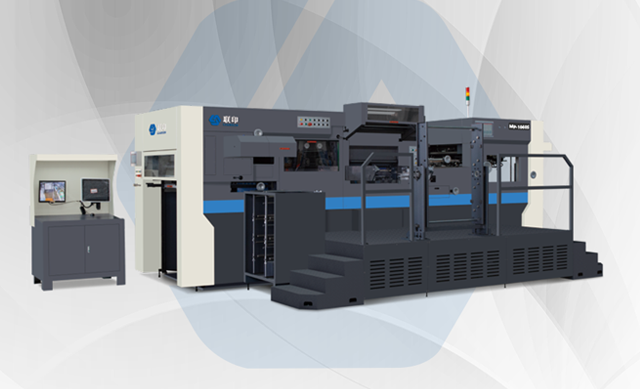
This in‑depth, SEO‑oriented guide explains industrial embossing and die cutting machines for
buyers, engineers, procurement managers, importers, distributors, and global exporters.
It focuses on definitions, types, benefits, typical configurations, and key selection
criteria – without naming specific brands – so it can be used directly for blogs,
product category pages, B2B directories, and industrial landing pages.
An industrial embossing and die cutting machine is a piece of
converting equipment designed to:
These machines are widely used in packaging, labels, folding cartons,
corrugated boxes, security documents, decorative films, automotive interiors,
and textile finishing. Many production lines combine embossing and die
cutting in a single pass to increase throughput and reduce handling.
Industrial embossing and die cutting machines can handle:
Manufacturers, suppliers, and exporters of industrial embossing and die cutting
machines serve a broad range of downstream industries. Key
application segments include:
When evaluating offers from top manufacturers, suppliers and exporters, buyers normally
expect the following core advantages from an industrial embossing and
die cutting system:
Different manufacturing environments require different machine configurations. Below
is an overview of the most common machine types offered by global
industrial embossing and die cutting manufacturers and exporters.
Flatbed die cutting machines use a flat die and a flat platen. They are ideal for
sheet‑fed operations and heavy materials.
Rotary die cutting machines utilize cylindrical dies and are usually integrated into
roll‑to‑roll production lines.
Digital die cutting machines replace physical dies with CNC‑controlled
cutting heads or laser cutting modules.
Embossing‑only units focus solely on the creation of textures and 3D effects.
Combined systems integrate both processes in a single frame or production line and are
heavily promoted by top industrial manufacturers and exporters.
Industrial embossing relies on matched tools:
Under controlled pressure and sometimes elevated temperature, the substrate is
sandwiched between the two tools. The material flows into the cavity,
creating a permanent raised (embossed) or recessed (debossed) feature.
In roll‑to‑roll machines, this occurs continuously between engraved cylinders.
In industrial die cutting machines, a sharpened die blade is pressed
against a substrate, either:
Depending on the setup, the machine can:
Top global manufacturers, suppliers and exporters of industrial embossing and
die cutting machines quote a range of technical specifications.
The exact values differ by model and configuration, but the most common
parameters include:
| Specification | Typical Range / Description | Relevance for Buyers |
|---|---|---|
| Max. sheet width or web width | 300 – 2,100 mm (narrow‑web to wide‑web) | Defines maximum product size and compatibility with existing printing lines. |
| Max. sheet length (flatbed) | 300 – 1,600 mm and above | Important for large packaging blanks, displays and POS materials. |
| Mechanical speed | 1,000 – 9,000 sheets/hour (flatbed); up to 300 m/min (rotary) | Determines throughput, influences cost per unit and capacity planning. |
| Embossing pressure | Up to 300 tons or more (flatbed); adjustable nip pressure (rotary) | Required to achieve clear, deep embossing on heavy substrates. |
| Die cutting force | Variable, often 80 – 400 tons (flatbed) | Critical when cutting thick board, plastics, or multilayer structures. |
| Registration accuracy | ±0.05 – ±0.2 mm typical | Essential for precise alignment with printed graphics and foil. |
| Material thickness range | From approx. 50 µm film up to 5 mm or more (depending on design) | Impacts the versatility of the machine across product categories. |
| Embossing temperature range | Ambient up to approx. 200 °C (with heated tools) | Higher temperatures can improve emboss definition on polymers and laminates. |
| Electrical power | Typically 10 – 80 kW and above, depending on size and features | Important for infrastructure planning and operating cost estimation. |
| Compressed air requirement | Often 6 – 8 bar, consumption depending on automation | Necessary for pneumatic clamping, stripping and waste removal units. |
| Tooling Feature | Common Options | Buyer Considerations |
|---|---|---|
| Die type | Steel rule dies, solid rotary dies, flexible dies, laser‑cut dies | Cost, lead time, durability and suitability for complex designs. |
| Embossing tools | Brass, steel, magnesium, engraved rollers | Level of detail, lifetime, compatibility with temperature and pressure settings. |
| Tool mounting | Quick‑change systems, magnetic cylinders, die drawers | Setup speed and flexibility for frequent job changeovers. |
| Optional coatings | Hard chrome, nitriding, Teflon‑like coatings | Improved wear resistance, reduced sticking, easier cleaning. |
| Depth control | Mechanical stops, servo‑controlled impression, micrometric adjustment | Required for precise embossing depth and kiss‑cut quality. |
| Feature | Description | Why It Matters |
|---|---|---|
| Servo drives | Individual servo motors for feeders, cylinders, and conveyors | Enables high registration accuracy and flexible process control. |
| Automatic sheet feeder | Pile or non‑stop feeder with air separation | Reduces labor, supports high‑speed production. |
| Web guiding system | Edge or line sensors guiding the web laterally | Maintains registration in roll‑to‑roll embossing and die cutting. |
| Vision inspection | Cameras monitor print‑to‑cut registration and defects | Supports quality assurance and scrap reduction. |
| Touchscreen HMI | Central operator interface with recipe management | Improves usability, training efficiency and job repeatability. |
| Remote diagnostics | Network connectivity for service and software support | Important for international buyers working with overseas manufacturers. |
When selecting an industrial embossing and die cutting machine from global
manufacturers, suppliers or exporters, material compatibility is crucial.
Typical substrates include:
Buyers should always confirm with potential machine suppliers:
The following step‑by‑step selection guide helps purchasers compare offers from top
industrial manufacturers, suppliers and exporters on a technical and
commercial basis.
| Parameter | Questions for Suppliers / Exporters |
|---|---|
| Format size | What is the maximum and minimum format? Does it match my existing print formats? |
| Press force and pressure | Is the die cutting force sufficient for my heaviest material? Can I adjust emboss pressure precisely? |
| Registration tolerance | Can the machine maintain the accuracy needed for high‑graphic packaging or security elements? |
| Tooling system | What die types are supported? How quickly can tools be changed or adjusted? |
| Automation level | Are feeding, stacking, stripping, and waste removal automated or manual? |
| Embossing flexibility | Is there adjustable temperature, pressure and dwell time for different patterns and materials? |
| Future upgrades | Can the system be expanded with extra stations, inspection, or inline finishing units? |
The following generic specification table compares three typical configuration
levels often offered by industrial embossing and die cutting machine
manufacturers: Entry‑Level, Standard, and High‑Performance. The figures are
indicative and not linked to any specific company.
| Feature | Entry‑Level Line | Standard Line | High‑Performance Line |
|---|---|---|---|
| Target users | Small converters, start‑ups, sample rooms | Regional packaging printers, label converters | High‑volume industrial plants, export‑oriented factories |
| Max. sheet / web width | Up to 600 mm | Up to 1,060 mm | Up to 1,450–2,100 mm |
| Typical speed | 2,000 sheets/h or 80 m/min | 5,000 sheets/h or 150 m/min | 8,000+ sheets/h or 250–300 m/min |
| Die cutting force | Up to 100 tons | Up to 200 tons | Up to 400 tons and above |
| Embossing capability | Basic embossing unit, manual adjustments | Servo‑controlled, temperature‑adjustable station | Multi‑station embossing with programmable recipes |
| Automation | Manual loading, basic delivery | Automatic feeder, automatic stacking | Fully automated feeding, stripping, and palletizing |
| Control system | Simple PLC with push‑button or small HMI | Color touchscreen HMI with job memory | Advanced HMI, network connectivity, remote diagnostics |
| Integration | Offline operation only | Optional inline connection to printing or laminating | Designed for complete integrated finishing lines |
| Typical investment level | Lowest capital cost; focus on simplicity | Balanced price/performance; scalable | Highest capacity and automation; best for large‑scale exports |
Consistent quality is a major selling point for industrial embossing and die cutting
machine suppliers and exporters. Buyers should review how potential equipment
supports quality control:
For international buyers and distributors, after‑sales support is as important as the
initial purchase price. Industrial embossing and die cutting machines generally
require:
Buyers should verify with potential manufacturers and exporters:
The market for industrial embossing and die cutting machines is highly
international. Buyers can source equipment from Asia, Europe, North
America and other regions. When comparing quotations and catalogs from top
manufacturers, suppliers and exporters, consider the following:
Distributors and trading companies often cooperate with several equipment
manufacturers. An industrial buyer may choose to purchase directly from the
original machine builder or work through a regional supplier that offers local
service and financing.
Embossing creates a raised feature on the front side of the material,
while debossing forms a recessed impression. Industrial embossing and
die cutting machines can be configured for either effect depending on tool design and
material support.
Many industrial lines integrate both processes. They may include a
dedicated embossing station followed by a die cutting station and optional stripping
or blanking. This setup is common in premium packaging and greeting card production.
Flatbed die cutting is ideal for thicker materials, large format sheets,
and complex carton layouts, typically at moderate speeds. Rotary die cutting
is preferred for high‑speed roll‑to‑roll production of labels, films and narrow‑web
products.
Heated tools can improve embossing definition on plastics, laminates and certain
coated papers. For purely mechanical embossing on standard board, unheated tools
may be sufficient. Buyers should discuss substrate and design requirements with
potential machine suppliers.
To receive a precise offer from industrial embossing and die cutting machine
manufacturers, provide:
Industrial embossing and die cutting machines are essential for modern converting,
packaging, and label finishing operations. By understanding the core
technologies, machine types, technical parameters and selection criteria,
buyers and project engineers can evaluate proposals from leading manufacturers,
suppliers and exporters more effectively.
Clear technical specifications, realistic performance expectations, robust
after‑sales support and careful material testing are the foundation of a successful
investment in industrial embossing and die cutting equipment. This selection guide
can be reused for product category pages, B2B directories, and industry blogs to
support informed decision‑making and attract targeted search traffic.
```
NÚMERO DE CONTATO +86 18713883276(MESMO QUE WHATSAPP) E-mail: tslianshun@126.com
endereço: vila CAI he dong, cidade CAI ting Qi AO, condado de Y UT Ian, cidade de Tangshan, província de Hebei
Copyright © 2025 Tangshan Lianshun Printing Machinery Manufacturing Co., Ltd. Todos os direitos reservados


Este site usa cookies para garantir que você tenha a melhor experiência em nosso site.

 English
 Español
 Pусский
 العربية
 中文



 Telefone
Comente
(0)